What Happens If You Cut Down a Protected Tree?
Most people who remove a protected tree without permission don't set out to break the law — they simply didn't realise the tree, or even its roots, were covered. Here are the most common ways homeowners get caught out, and what it actually means if it happens.
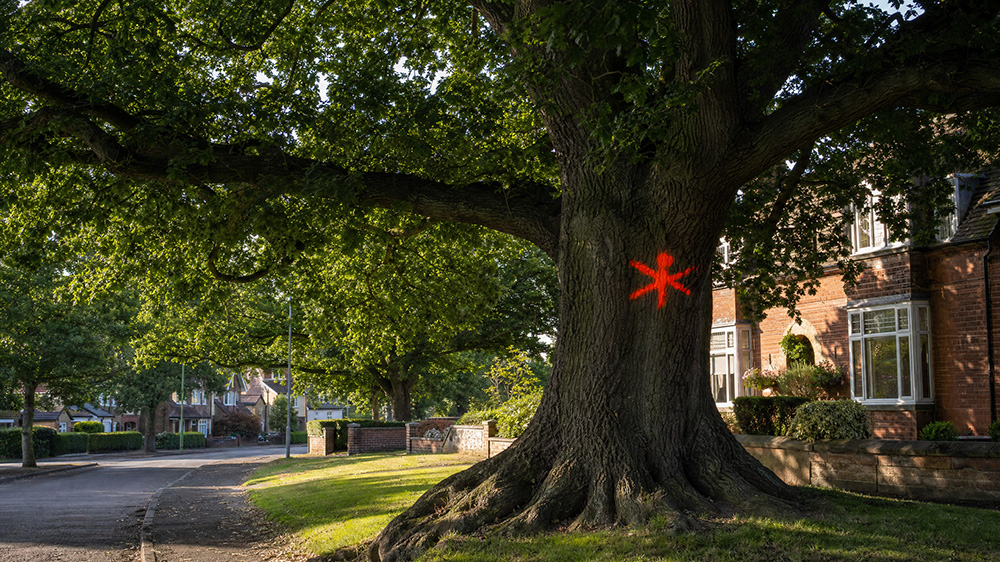

The Offence, and What It Actually Carries
Cutting down, topping, lopping, uprooting or wilfully damaging a tree protected by a Tree Preservation Order without consent is a criminal offence under Part VIII of the Town and Country Planning Act 1990. Section 210(2) sets the penalty: a fine of up to £20,000 in the magistrates' court, and in serious cases the matter can be committed to the Crown Court, where the fine is unlimited.
There's a detail in section 210(3) that catches people out. When setting the fine, the court must take into account any financial benefit that has resulted, or is likely to result, from the offence. If a tree came down because it was blocking light to a development plot or affecting what a property was worth, that gain forms part of the calculation.
It's Often a Genuine Mistake, Not a Deliberate One
People rarely set out to knowingly remove a protected tree. The version we hear most often is someone misreading the Tree Preservation Order map and taking down the wrong tree entirely — the Order applied to a different tree nearby, but the boundary on the map wasn't read correctly.
Unfortunately that doesn't help much after the event. The offence doesn't require any intention to break the law, only that the work was carried out without consent.
"Small" Doesn't Mean Unprotected
One of the most common assumptions we come across is that a smaller or younger-looking tree can't possibly have a protection order on it. Where a tree is covered by an Order, size is irrelevant — there is no minimum. A Tree Preservation Order is about the value of the tree to the local area, not how big it looks from the pavement.
The confusion usually comes from conservation areas, which do have a size threshold. Trees in a conservation area that aren't covered by an Order are protected under section 211 instead, and no notice is needed for a tree whose diameter is 75mm or less, measured over the bark at 1.5 metres above ground level. That rises to 100mm where the work is thinning purely to improve the growth of other trees. Multi-stemmed trees are measured differently, which is exactly where people get caught out.
The Roots Are Protected Too
This one catches people out more than almost anything else. A TPO doesn't just protect the trunk and canopy — the root system is covered under the same order. Digging, building, or laying hardstanding within a protected root zone can be a breach, even if you never touch the tree itself with a saw.
It's a particular risk on building projects, where groundworks can damage roots well outside the spread of the branches.
"Dead or Dangerous" Is an Exception, Not a Free Pass
Exceptions to the need for consent do exist. They cover work on dead trees and branches, dangerous trees and branches, work needed to comply with an Act of Parliament, work to prevent or abate a nuisance, work necessary to implement a planning permission, work on fruit trees, and work by or for statutory undertakers.
But an exception is something you have to be able to evidence afterwards, potentially to a court. Removing a protected tree on the basis that "no one will check" is a risk, not a defence. If you genuinely believe a protected tree is dead or dangerous, get it assessed and documented properly before any work happens, not after.
In a conservation area the rule is more specific again. If you're removing a tree because it's dead, you must give the authority five days' notice before the work starts. The only exception is where there's an immediate risk of serious harm — in that case the work can go ahead, but written notice is required as soon as practicable afterwards.
You May Also Be Ordered to Replace It
The fine isn't necessarily the end of it. Section 206 of the same Act places a duty on the landowner to replace a tree removed in breach of an Order, and the authority can serve a tree replacement notice to enforce it. That obligation attaches to the land rather than the person, so it can fall on a future owner.
Unauthorised work can also resurface later, when a planning application is made on the same site.
How to Check Before Anything Happens
Protection status is held by the local planning authority, and which one applies depends entirely on where the tree is. Across the area we cover that means Leicester City Council, Charnwood, Hinckley and Bosworth, Blaby, Oadby and Wigston, North West Leicestershire, Melton, or Harborough. Each publishes Tree Preservation Order and conservation area information through its own planning portal.
If an Order applies, you apply to that authority for consent. If it hasn't decided within eight weeks of receiving the application, you can appeal to the Planning Inspectorate on the grounds of non-determination. Consent, once granted, lasts two years by default unless the authority sets a different limit.
In a conservation area where no Order exists, it's a section 211 notice and a six-week wait instead — although the work can go ahead sooner if the authority gives consent in the meantime.
Unsure If Your Tree Is Protected?
Rogers & Cork Tree Care can check the protection status of a tree before any work goes ahead, across Leicester, Hinckley, Loughborough, Oadby, and the wider Leicestershire area. If you've got a tree you're not sure about, get in touch and we'll take a look. Free quotes, no obligation.