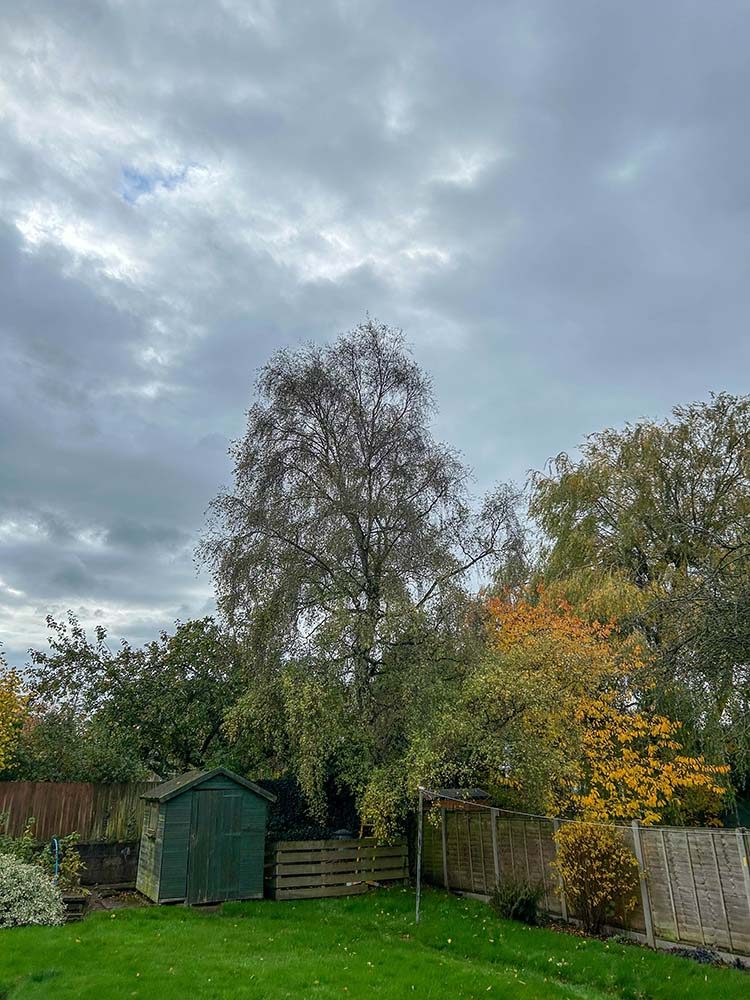
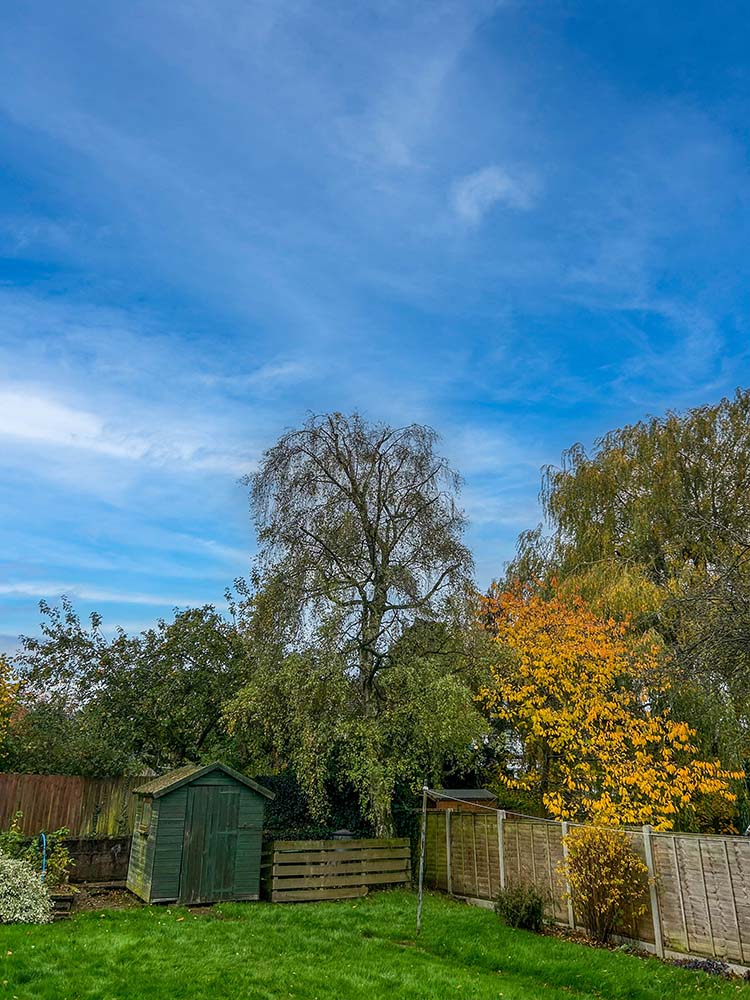
Careful crown reduction to manage size and improve light without spoiling the natural form of the tree.


The Silver Birch had grown tall and dominant within the garden, shading a large portion of the lawn and surrounding planting areas. The customer wanted to improve light levels and reduce the overall scale while keeping the tree as a feature. The aim was to reduce height and spread without making the tree look heavily cut back.
We performed a controlled crown reduction, shortening the outer canopy back to suitable growth points across the tree. Climbing techniques were used to allow precise pruning and maintain the tree’s natural outline. This reduced the overall size while keeping a balanced and sympathetic shape.
The tree is now better proportioned to the garden, allowing more light into the space below while retaining its character. The structure is lighter and easier to manage moving forward. All cut material was removed and the garden left clean and tidy after completion.
.avif)
We focus on doing things properly. From the first assessment to final clean-up, our approach is built around safe working practices, clear communication, and leaving your property exactly as we found it.
All work is carried out by trained arborists and fully insured for your peace of mind.
Every job is planned and executed with safety as the top priority for your home, family, and surrounding area.
We remove all waste and leave your garden clean and tidy once the work is complete.
The best time of year to prune trees depends on the species and the purpose of the pruning. In general, winter and early spring are good times to prune deciduous trees, while summer is best for pruning conifers.
Deadwood is a natural part of a tree’s life cycle. When deadwood becomes excessive it can reduce the phycological processes of the tree. From a risk perspective deadwood can break off unpredictably posing a risk to people, vehicles and properties. These are the main reasons why deadwood should be removed, but if the risk of harm is low, it can be retained as it provides benefits for wildlife.
Yes but if we spot an active nest during the inspection or while working we will stop work immediately and reschedule the work for after the nesting season.
Nesting season in the UK typically runs from March to August, but birds can nest outside of these months too. We always check carefully before starting any pruning or felling.
Yes we are fully NPTC qualified and fully insured, with public liability cover in place.
We’re based in Earl Shilton and cover all surrounding areas, including Leicester, Hinckley, Barwell, Burbage, Market Bosworth, and the wider Leicestershire region.
Some trees are protected under Tree Preservation Orders (TPOs) or located in conservation areas. If you're unsure, we can check with your local council and help with any paperwork.
Costs vary depending on the size, access and complexity of the job. We always provide a clear, fixed price before starting.
Light rain doesn’t stop us but for safety reasons, we may need to reschedule in high winds or storms especially for tree climbing or felling jobs. We’ll always keep you informed.
Once a tree is completely removed and the stump is ground out, it will not regrow. However, if the stump is left in place, some species may send up new shoots unless treated.
Skilled, insured, and equipped for projects of any size.